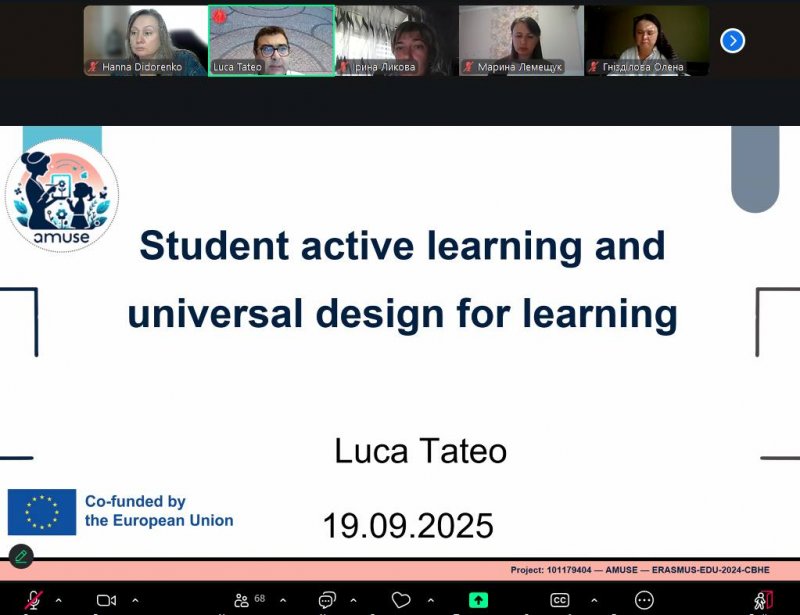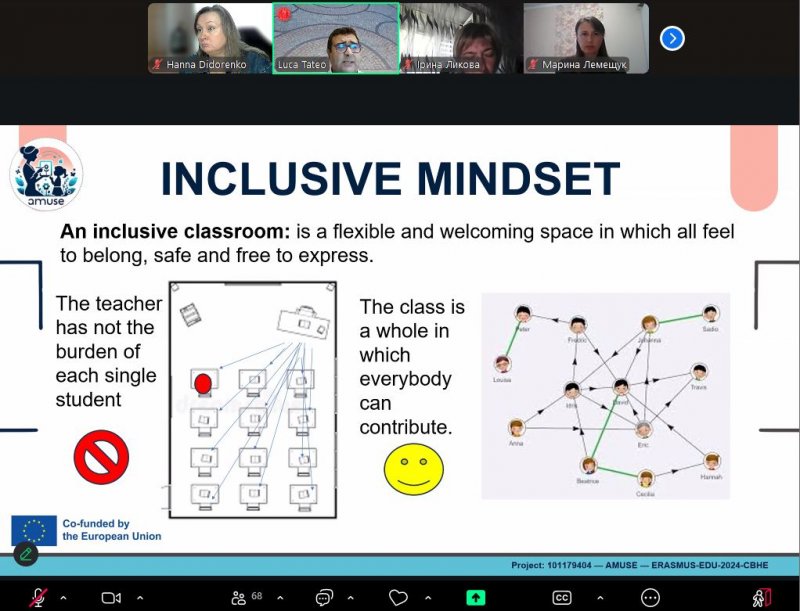
17 вересня 2025 року відбувся другий вебінар онлайн-курсу проєкту AMUSE «Підходи ЄС до оновлення та розробки навчальних програм», який провів професор Лука Татео (Університет Осло). Його лекція «Активне навчання студентів та універсальний дизайн навчання (UDL)» була присвячена створенню інклюзивних освітніх просторів, де кожен здобувач освіти відчуває приналежність та бере активну участь у процесі навчання. Професор підкреслив, що інклюзія – це не лише про доступ до класу, а про зміну цінностей, методів та підходів. Було виділено три основні принципи:
Справедливість – навчання повинно адаптуватися до потреб людей.
Різноманітність – різні методи викладання, оцінювання та взаємодії задля врахування індивідуальних потреб.
Емпатія – прийняття різних способів сприйняття світу. Вебінар представив концепцію Універсального дизайну активного навчання (UDAL), що поєднує принципи UDL із методами активного навчання для створення гнучких і захопливих освітніх середовищ. Серед викликів для викладачів – розробка доступних матеріалів, поєднання інституційних вимог з особистими потребами студентів, надання їм більшої автономії.
Слухачі ознайомилися з практичними стратегіями:
Командні вікторини – обмін запитаннями між групами з повним залученням кожного учасника. «Команди слухачів» – визначені ролі (приклади, запитання, критика, підтримка) для розвитку дискусії та критичного мислення.
Перевернутий клас – розробка студентами власних планів занять із цілями, результатами та завданнями.
Low-tech активності – робота з простими матеріалами (папір, картки, малюнки) для зниження бар’єрів доступності.
Підтримка Європейською Комісією випуску цієї публікації не означає схвалення вмісту, який відображає лише погляди авторів, і Комісія не несе відповідальності за будь-яке використання інформації, що міститься в ньому.
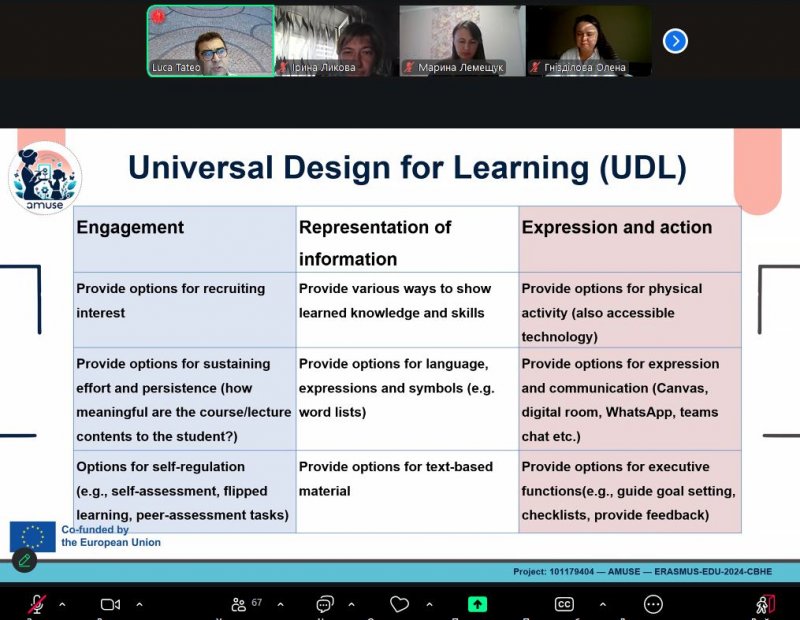
On 17 September 2025, the second webinar of the AMUSE project online course “EU Approaches to Syllabus Update and Design” took place, featuring Prof. Luca Tateo (University of Oslo). His lecture “Student Active Learning and Universal Design for Learning (UDL)” focused on how to build inclusive classrooms where every learner feels a sense of belonging and has the opportunity to participate actively. Prof. Tateo explained that inclusion is not only about physical access but about transforming values, teaching strategies, and classroom culture. He stressed three key principles:
Equity – education should adapt to people, not the other way around.
Diversity – different methods of teaching, assessment, and interaction must be applied to meet varied needs.
Empathy – acknowledging different ways of experiencing the world. The webinar introduced Universal Design for Active Learning (UDAL) – an approach that combines UDL principles with active learning strategies to create flexible and engaging learning environments. Key challenges for educators included designing accessible materials, balancing institutional requirements with individual student needs, and giving learners real autonomy. Practical strategies shared included:
Team quizzes – students prepare and exchange short-answer quizzes, ensuring full participation. Listening teams – structured roles (questioner, example giver, devil’s advocate, team player) encourage reflection and dialogue.
Flipped classroom – students design lesson plans with clear objectives, activities, and evaluation, actively shaping the learning process.
Minimal-tech group work – using simple materials (paper, cards, drawings) to lower barriers to participation. Throughout, Prof. Tateo highlighted that teachers should act as facilitators rather than lecturers, offering feedback and creating space for peer reflection. Active learning, he noted, has been shown to significantly improve student performance and engagement. The session raised vivid discussions on how to make learning a shared responsibility and how UDAL can support inclusive, future-oriented education.
Stay tuned for the next event in the AMUSE series as we continue exploring innovative approaches to inclusive teaching and curriculum design!
The European Commission support for the production of this publication does not constitute an endorsement of the contents which reflects the views only of the authors, and the Commission cannot be held responsible for any use which may be made of the information contained therein.
#Erasmus #AMUSE #AMUSE_AAC_ua #amusershu