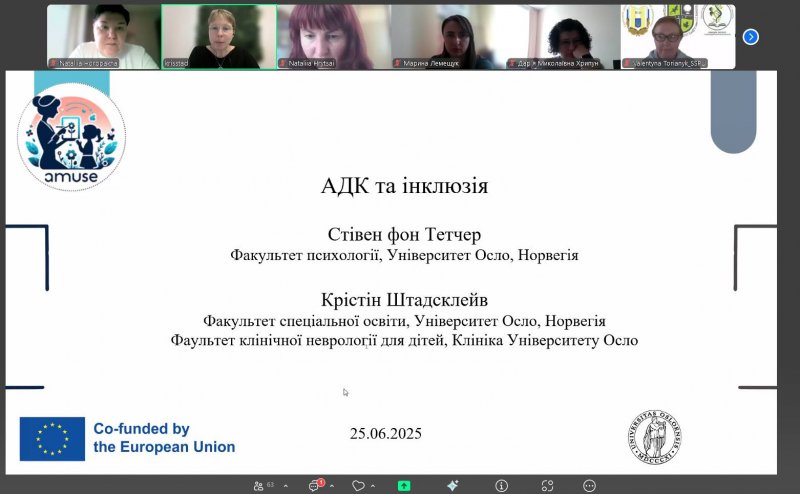
25 червня 2025 року відбувся третій вебінар онлайн-курсу «Методи навчання для інклюзії», що реалізується в межах проєкту AMUSE Erasmus+.
Сесію спільно провели відомі експерти з АДК професор Стефен фон Течкнер та доктор Крістіне Стадсклейв з Університету Осло (Норвегія).
Головною темою вебінару стали практичні підходи до інклюзії та використання допоміжних та альтернативних засобів комунікації (АДК) для підтримки активної участі дітей з порушеннями мовлення та особливості їх комунікації у звичайних освітніх середовищах.
До роботи долучилися 70 представників українських університетів і організацій-учасників проєкту, зокрема і команда Рівненського державного гуманітарного університету з реалізації проєкту «Комплексне запровадження методології доповненої та альтернативної комунікації в українській системі освіти» (AMUSE).
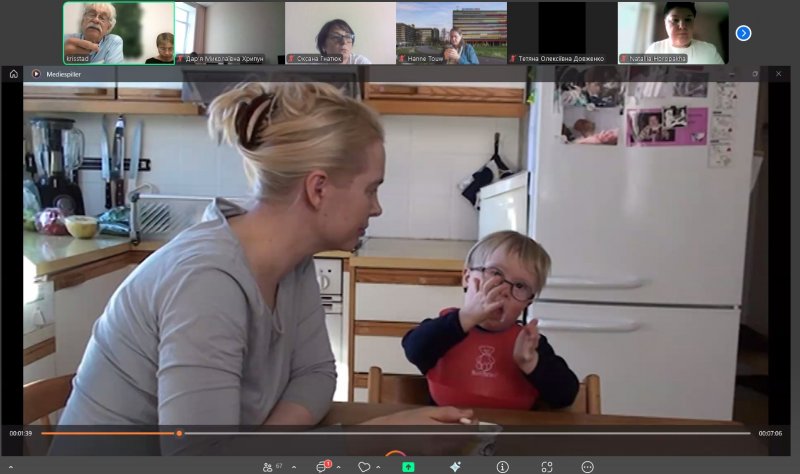
Учасники ознайомилися з реальними історіями успішної інклюзії, де ключову роль відігравала підтримка з боку ровесників, доступність засобів спілкування та співпраця між вчителями, батьками та учнями.
Спікери підкреслили важливість створення середовища, яке не змушує дитину «пристосовуватися», а забезпечує адаптацію освітніх і соціальних процесів під можливості кожної дитини, роблячи інклюзію невід’ємною частиною життя, а не просто формальною метою.
Підтримка Європейською Комісією випуску цієї публікації не означає схвалення вмісту, який відображає лише погляди авторів, і Комісія не несе відповідальності за будь-яке використання інформації, що міститься в ньому.
Third webinar of the “Methods of Teaching for Inclusion” online course
On June 25, 2025, the third webinar of the “Methods of Teaching for Inclusion” online course took place under the AMUSE Erasmus+ project.
The session was co-presented by AAC experts Prof. Stephen von Tetzchner and Dr. Kristine Stadskleiv from the University of Oslo (Norway).
The webinar focused on real-life strategies for inclusion and the use of Augmentative and Alternative Communication (AAC) to support active participation of children with special communication needs in various, including mainstream settings.
70 representatives of Ukrainian universities and organisations participating in the project joined the work, including a team of Rivne State University of Humanities implementing the project “Comprehensive Implementation of Augmented and Alternative Communication Methodology in the Ukrainian Education System” (AMUSE).
Participants explored inspiring case studies of the ways inclusion can become part of everyday life both at school and beyond. These stories highlighted the importance of peer competence, communication accessibility, and the joint role of teachers, families, and classmates.
The speakers discussed how to go beyond the idea of “fitting in” and instead adapt educational and social environments to all children’s communication abilities, making inclusion a lived reality, not a policy goal.
The European Commission support for the production of this publication does not constitute an endorsement of the contents which reflects the views only of the authors, and the Commission cannot be held responsible for any use which may be made of the information contained therein.
#Erasmus #AMUSE #AMUSE_AAC_ua #amusershu