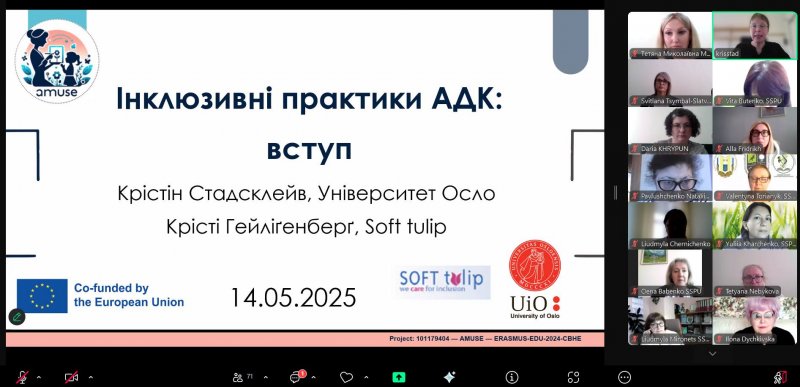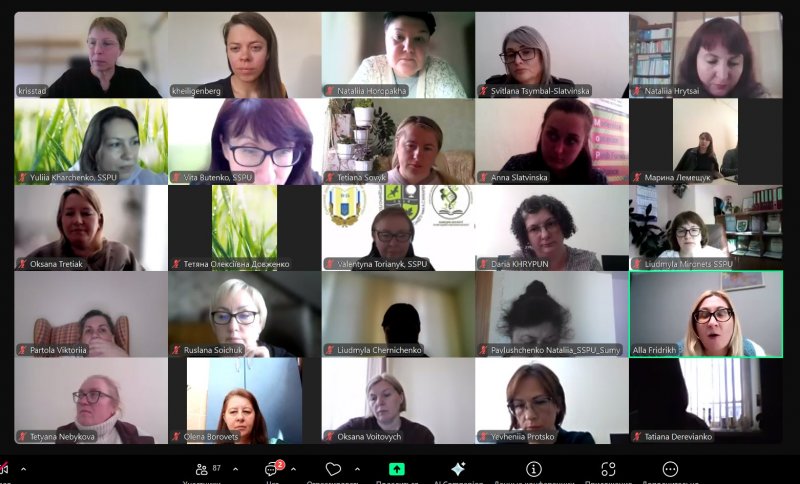


14 травня відбувся третій вебінар «Інклюзивні практики АДК: вступ». Спікерки: професорка Крістіне Стадсклейв (докторка психології, Університет Осло, Норвегія) та Крісті Гайлігенберг (експертка з АДК, ГО SOFT tulip, Нідерланди). Цей вебінар став третім у серії заходів у межах курсу «EU Inclusion Strategy and Social Equity», що реалізується в рамках проєкту AMUSE (Erasmus+ KA2 CBHE, співфінансований ЄС).
Під час сесії учасники:
- Ознайомилися з підходами до оцінювання дітей, які потребують АДК – що саме оцінюється, чому це важливо та як забезпечити міждисциплінарність.
- Проаналізували приклади із практичного досвіду роботи ГО SOFT tulip.
- Обговорили, як результати оцінки впливають на доступ до відповідних засобів АДК.
- Дізналися, як підготувати інклюзивне класне середовище, спроможне підтримати користувача АДК через мовне оточення, партнерство та адаптацію.
Учасники сесії наголосили, що АДК – це не просто засіб підтримки, а базове право. Справжня інклюзія можлива лише за умов, коли комунікація є доступною, визнаною та підтриманою.
Підтримка Європейською Комісією випуску цієї публікації не означає схвалення вмісту, який відображає лише погляди авторів, і Комісія не несе відповідальності за будь-яке використання інформації, що міститься в ньому.
On 14 May the third webinar «Inclusive AAC Practices: An Introduction» took place. Speakers: Prof. Kristine Stadskleiv (Doctor of Psychology, University of Oslo) & Kristy Heiligenberg (AAC expert, NGO SOFT tulip). This session was the third in a series of webinars under the Erasmus+ KA2 CBHE AMUSE project, co-funded by the European Union. The course strengthens the understanding of inclusion strategies and equitable access in education through expert contributions and international cooperation to further integrate AAC in Ukraine.
Participants explored:
- The assessment of children in need of AAC – what to assess, why it matters, and how to ensure a multidisciplinary approach.
- Practical case studies from SOFT tulip, providing insights into real-world AAC use.
- How assessments inform access to appropriate AAC tools.
- Ways to prepare inclusive classrooms by equipping environments and educators to support AAC users meaningfully.
The session reinforced the principle that AAC is not just a support system but a fundamental right – and inclusion is only possible when communication is available, accessible, accepted, and supported.
The European Commission support for the production of this publication does not constitute an endorsement of the contents which reflects the views only of the authors, and the Commission cannot be held responsible for any use which may be made of the information contained therein.
#Erasmus #AMUSE #AMUSE_AAC_ua #amusershu